

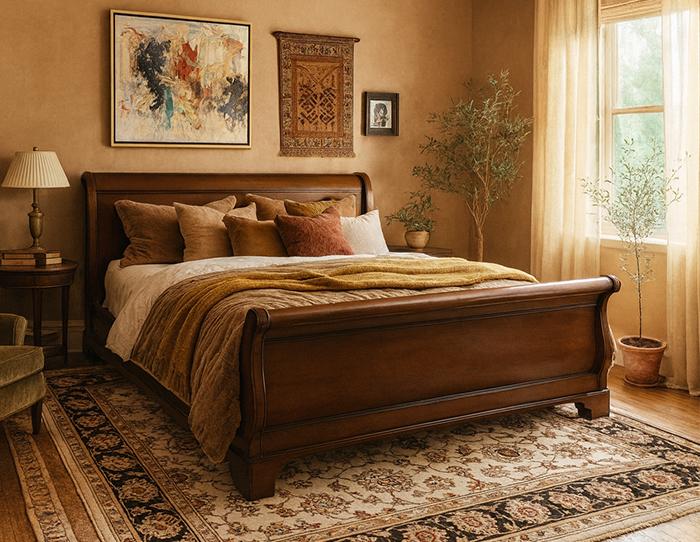
Bedrooms are no longer treated as purely functional sleeping areas. They have slowly evolved into private retreats where comfort, mood, and personal expression matter just as much as practicality. People are now investing more thought into textures, lighting, and spatial harmony to create a calming environment that supports rest and relaxation. Soft furnishings play a major role in this transformation, influencing how the entire space feels from the moment you step inside.
The shift toward wellness-focused interiors has also encouraged homeowners to think beyond basic furniture. Every element, from curtains to flooring, contributes to the emotional tone of the room. Subtle changes in material choice can make a space feel warmer, more grounded, and more inviting.
The Role of Flooring in Bedroom Aesthetics
Flooring often sets the foundation for the entire bedroom design, yet it is frequently overlooked. While wooden floors, tiles, and laminates are common choices, they can sometimes feel cold or overly minimal without proper layering. This is where soft floor coverings become essential in balancing both comfort and style.
A well-chosen floor piece can transform the visual depth of a room. It anchors furniture, defines walking space, and adds a tactile softness that enhances daily living. Beyond appearance, it also improves acoustics by reducing echo and creating a quieter, more peaceful atmosphere.
Introducing Comfort Through Layered Textures
Layering textures is one of the most effective interior design strategies for bedrooms. Combining fabrics like cotton, wool, velvet, and blended fibers creates a sense of richness without overwhelming the space. The goal is to achieve balance—softness underfoot paired with clean, intentional design choices elsewhere.
Color selection also plays an important role. Neutral tones like beige, ivory, and soft grey promote relaxation, while deeper shades such as navy, emerald, or burgundy add a sense of depth and sophistication. Patterned designs can introduce subtle personality without disrupting the calming environment.
At the center of this design approach, luxury bedroom carpet choices become a defining feature that ties the entire room together, blending comfort with visual elegance in a way that instantly elevates the space.
Material Quality and Long Term Comfort
Not all floor coverings are created equal, especially when it comes to bedrooms. Material quality determines not only how something looks but also how it feels over time. Natural fibers are often preferred for their breathability and softness, while high-quality synthetic blends offer durability and easy maintenance.
Pile height, density, and weave structure all influence comfort levels. A thicker, more plush surface provides a cushioned feel that enhances barefoot comfort, while tighter weaves offer a more refined and structured appearance. The right choice depends on lifestyle needs, climate, and personal preference.
Durability is equally important. A bedroom may not experience heavy foot traffic compared to other areas, but long-term use still demands materials that retain their shape, color, and softness over time.
Design Harmony and Interior Flow
A well-designed bedroom is one where every element feels connected. Furniture placement, lighting, and color schemes should work together to create a unified atmosphere. A soft floor element can help visually ground the bed, nightstands, and seating areas, ensuring the room feels cohesive rather than scattered.
Minimalist designs often benefit from subtle textures, while more decorative interiors can handle bold patterns or layered styling. The key is consistency—repeating colors or materials in small details across the room helps maintain visual balance.
Lighting also plays a critical role in highlighting textures. Warm lighting enhances softness and creates a cozy evening ambiance, while natural daylight brings out the richness of materials during the day.
Emotional Impact of Bedroom Design
Bedrooms have a direct connection to emotional well-being. A thoughtfully designed space can improve sleep quality, reduce stress, and create a sense of stability. Soft textures underfoot contribute to this effect by adding physical comfort and psychological warmth.
Walking into a room that feels calm and well-composed can instantly shift mood after a long day. This emotional response is what makes interior design more than just aesthetics—it becomes a form of self-care.
Conclusion Creating a Restful Personal Sanctuary
Designing a bedroom is ultimately about creating a space that feels personal, comfortable, and restorative. Every choice, from furniture to flooring, contributes to the overall experience of the room. When carefully selected, soft floor coverings can transform an ordinary sleeping area into a refined retreat that supports both rest and relaxation.
By focusing on texture, color harmony, and material quality, homeowners can achieve a balanced environment that feels both elegant and comforting. The result is a bedroom that not only looks beautiful but also feels like a true sanctuary at the end of each day.

 Arabic
 French
 Spanish
 Portuguese
 Deutsch
 Turkish
 Dutch
Dutch
 Italiano
 Russian
 Romaian
 Portuguese (Brazil)
 Greek
Greek